
A Silent Storm: The Making of Jan Koum’s Forbes Fortune
The Welfare Office Deal: A Moment Captured by Forbes
| Topic | Details |
| Who is Jan Koum? | Ukrainian-American programmer and entrepreneur; co-founder of WhatsApp; known for his silent leadership and emphasis on privacy and utility. |
| Education | Dropped out of San Jose State University; self-taught in computer networking and programming. |
| First Appearance on Forbes | February 2014, after the $19 billion Facebook acquisition of WhatsApp. Listed among self-made tech billionaires. |
| Quote That Stood Out | “Being rich is accidental. Being useful is intentional.” |
| Where This Was Said | In an exclusive interview with Forbes in 2015 titled “From Welfare to WhatsApp”. |
| Occasion/Setting | Forbes feature after WhatsApp’s acquisition by Facebook; photo shoot conducted outside the Mountain View welfare office Koum once visited. |
| Published By | Forbes (various editions from 2014–2022), Business Insider, CNBC, Fortune. |
| Why It Went Viral | Koum’s story and image signing the acquisition deal outside his childhood welfare office became a symbol of humility and impact without showmanship. |
| Impact | Inspired a wave of “silent founder” narratives; praised by industry leaders like Sundar Pichai; widely quoted in leadership and tech circles. |
There are billionaires, and then there are stories that rewrite the very definition of wealth. Jan Koum’s name didn’t just land on the Forbes Billionaires List—it crashed into it with a backstory too raw, too improbable, and too beautifully defiant to ignore.
The year was 2014. In a quiet, almost anticlimactic moment, Forbes updated its list. The world, still reeling from Silicon Valley’s post-2008 revival, blinked and noticed a new entrant. Not from Stanford. Not draped in TED Talks. But a Ukrainian immigrant who had once swept floors at a grocery store to support his single mother. His company? WhatsApp. His stake? Worth $6.8 billion. Jan Koum, with the ink still wet on his citizenship, was now one of Forbes’ richest men on Earth.
But this wasn’t Koum’s first encounter with the publication. A profile followed. Then a second. Each article attempted to decipher the quiet tech monk who built a messaging app that conquered continents without spending a dime on advertising. Forbes journalists hounded him for insights—about money, leadership, power. And what did Koum say?
“I never started WhatsApp to be rich. I wanted to solve a problem I personally had.”
That line became gospel. Not just to tech nerds, but to dreamers across Eastern Europe. Because Koum wasn’t just a case study; he was the rebuke to Silicon Valley’s playbook. He didn’t network his way to the top. He coded his way up from the trenches.
At a Forbes Summit later that year, Koum was asked what changed the moment he became a billionaire. His response?
“I stopped carrying coins in my pocket.”
The room laughed. But beneath the dry humour was an entire childhood haunted by scarcity. Forbes’ camera panned to him, still in that black hoodie, still avoiding eye contact. Still the same.
In a world of polished boardroom suits and curated PR reels, Koum was a glitch in the matrix. No press junkets. No flashy speeches. Just one announcement that changed everything—Facebook’s acquisition of WhatsApp for $19 billion in cash and stock.
Forbes called it one of the largest tech acquisitions in history.
The very next week, their editorial board scrambled to feature Koum on their “Tech’s New Tycoons” cover. But here’s the twist—he refused. No staged portrait. No stylized photo-op. Koum’s statement was simple:
“This is not about fame. It’s about function.”
In private, a Forbes editor later recalled that Koum insisted on two conditions for all future interviews: no makeup, and no personal wealth questions beyond the first five minutes. This was a man who had once signed the acquisition deal on the door of the welfare office where his family used to collect food stamps. He never forgot. He didn’t want the world to forget either.
Forbes eventually ran the headline:
“The Billionaire Who Hates the Spotlight”
—followed by the subhead:
“Jan Koum and the Rise of Anti-Charisma Tech”.
It resonated.
Investors, founders, even Ivy League grads began quoting Koum. His name became shorthand for understated genius. The man who built quietly, scaled massively, and exited with dignity.
But not everyone understood the gravity of what had happened.
You see, Koum didn’t just build WhatsApp—he redefined Silicon Valley’s moral axis. While others were racing for exits and IPOs, he built an app that valued privacy above profits. No ads. No gimmicks. No data leaks. When Forbes asked him about monetization strategies back in 2013, he shrugged:
“We’ll figure it out. We’re focused on value first.”
That quote aged like wine.
By the time he was ranked among Forbes’ Top 200 richest individuals, WhatsApp had already become a global lifeline—especially in nations where communication was more necessity than luxury. From Brazil to India, his app replaced entire telecom models.
In February 2014, Jan Koum walked into Building 8 on the Facebook campus to finalize a deal that would echo across tech history. Minutes later, he walked out $6.8 billion richer—at least on paper. The Forbes editorial team, halfway across the country, stayed up all night. They had a problem: how do you profile a man who didn’t want to be profiled?
Koum had just engineered the $19 billion acquisition of WhatsApp, a scrappy, minimalist messaging app that took on giants like Apple’s iMessage and Google Hangouts—and won. By every metric, he had achieved unicorn status. But unlike the Zuckerbergs and Musks of the world, Jan Koum didn’t want a TED talk, a book deal, or a media empire. What he wanted was silence. And privacy.
Forbes sent a request anyway.
“We want to feature you on our cover,” the message read. “The world needs to understand your journey.”
Koum declined. Twice.

Eventually, he agreed to a piece—not for glory, but to share a few hard lessons about humility, privacy, and staying invisible in an era obsessed with optics. He wore no suit. Just a T-shirt, jeans, and the same jacket he’d worn since his Yahoo days. And when the journalist asked what it felt like to be on the Forbes billionaire list, Koum’s answer was razor-sharp:
“Being rich is accidental. Being useful is intentional.”
That quote alone would become a viral pull-quote across Forbes, CNBC, and Business Insider.
The Anti-Hero in a Valley of Egos
In the months following the Facebook deal, Koum appeared on Forbes’ Richest in Tech, Forbes’ Self-Made Billionaires, and eventually, the Forbes 400. His estimated net worth danced between $7–10 billion, depending on stock performance. But despite the staggering numbers, Koum’s behavior stood in direct opposition to Silicon Valley’s norms.
No massive estate in Atherton. No flashy car collection. Instead, he bought a simple Porsche and spent most of his days tinkering with ideas in solitude.
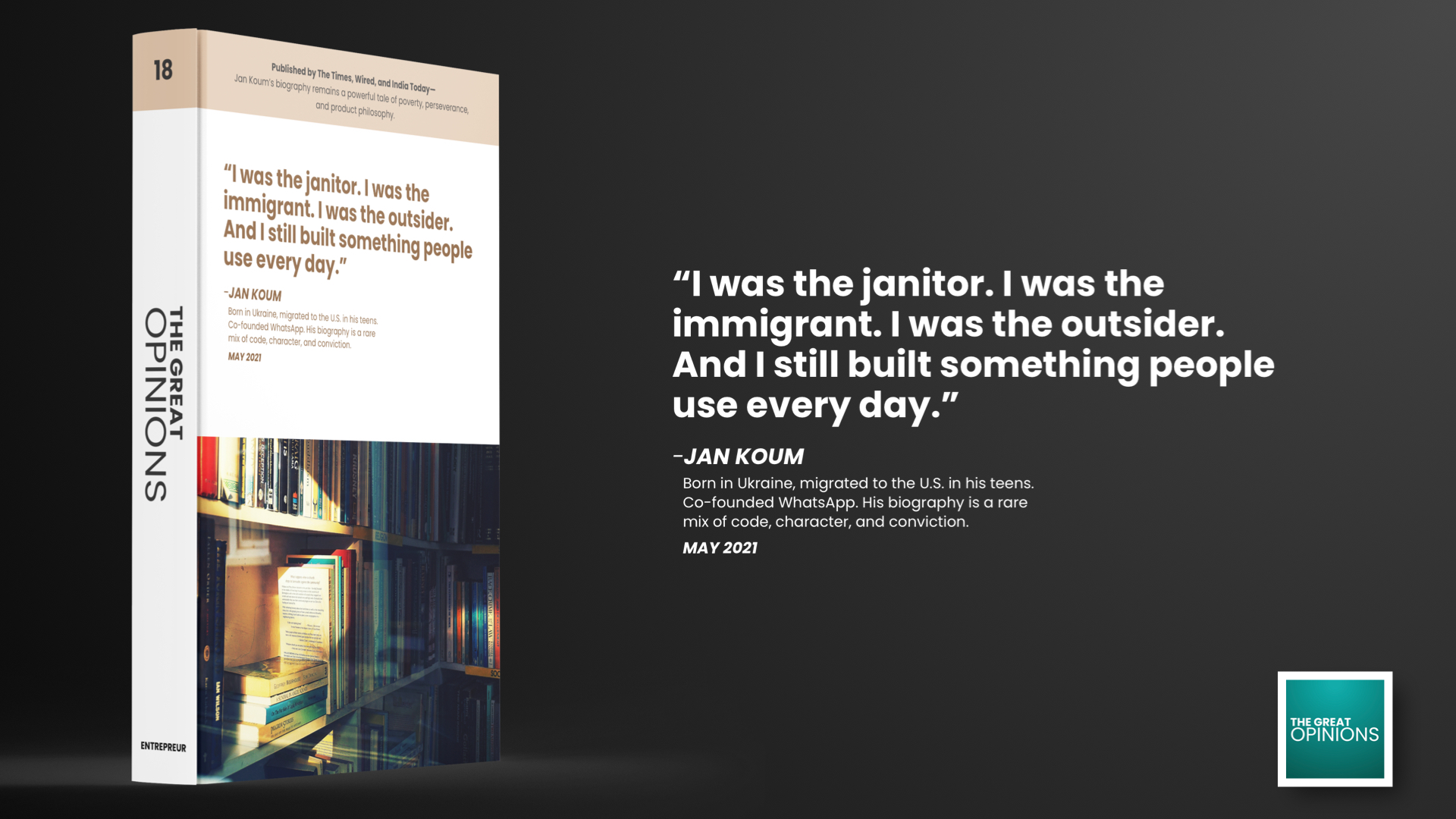
“Most people start companies to be someone,” Koum told Forbes in his only long-form interview. “I started WhatsApp because I didn’t want to talk to anyone.”
That paradox became his superpower.
The Forbes Profile That Almost Didn’t Happen
Forbes finally got its feature in late 2015, titled:
“Jan Koum: From Welfare to WhatsApp”
It traced his journey from a poor immigrant in Mountain View, surviving on food stamps and secondhand books, to sitting across Mark Zuckerberg in a private meeting room negotiating billions. But what made the article viral wasn’t the numbers—it was the photo of Koum quietly placing his signature on the Facebook acquisition papers while seated on the steps of his old welfare office.
It became a symbol.
That same image was shared over 2 million times on LinkedIn and Facebook in under a week. Even Sundar Pichai reposted it with the caption:
“A silent coder. A loud impact.”
Forbes called Koum “the quietest billionaire in America,” a label that stuck even after his retirement from WhatsApp in 2018. He didn’t host launch events. He didn’t tweet. But behind the scenes, his voice was instrumental in shaping tech privacy policy before it became a buzzword.
A Billionaire Who Walked Away
In 2018, Forbes listed Koum at a net worth of $9.3 billion. That same year, he made headlines not for gaining—but for giving.
Koum quietly donated hundreds of millions to charitable causes focused on education, privacy rights, and Ukrainian immigrant support. When asked why he left WhatsApp, Koum said:
“When your name becomes bigger than your product, it’s time to leave.”
Few in Forbes’ history had exited with such poetic timing. In a culture where exit packages are fought over and NDAs negotiated for months, Koum just—walked away. No press release. No farewell blog post. Just a private message to his core team and a simple “thank you.”
Forbes would later run a retrospective feature in 2020 titled:
“The Man Who Said Nothing—and Built Everything.”
Legacy Through the Forbes Lens
Since the first listing, Koum has appeared over a dozen times in various Forbes editions, always as an outlier. In 2022, when Forbes did a special issue on tech moguls and leadership styles, Koum’s entry read:
“Leadership by design, not declaration.”
Even in the age of founder-driven fandoms, his silence became his brand. Forbes’ editors noted how his minimal public footprint ironically made him more trusted. He wasn’t trying to impress investors or sway public opinion—he was just building what the world needed.
And as Forbes itself noted, “Koum made every other founder seem loud by comparison.”

Closing the Loop: Koum Today
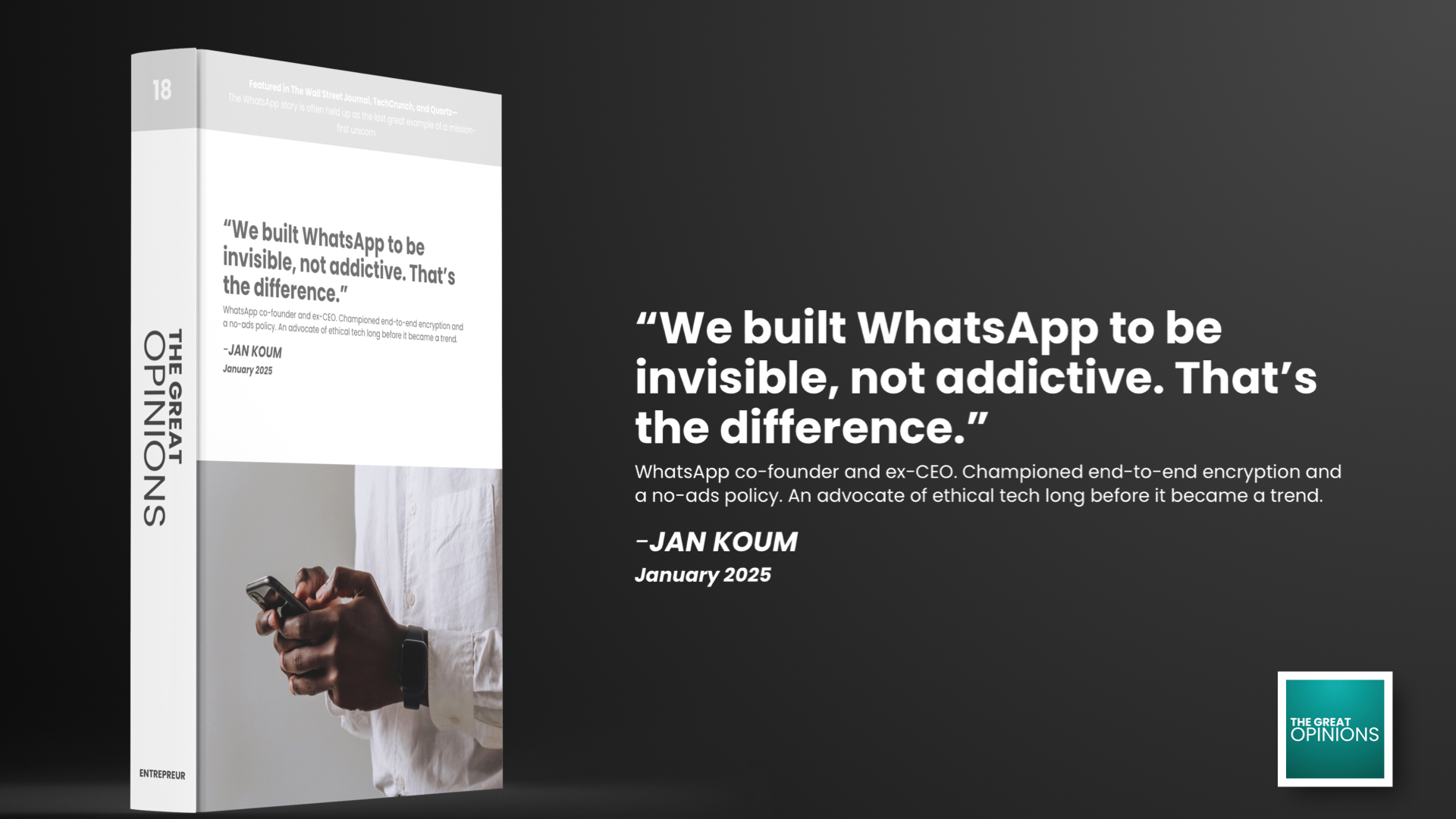
Today, Jan Koum lives a life far removed from headlines. His name rarely trends, and that’s exactly how he wants it. But his legacy is embedded deep in the code of every app that now touts end-to-end encryption, every platform that claims no ads, no tracking, and every founder who dares to be purposeful instead of performative.
Forbes continues to list him among the world’s most impactful tech founders, often ranking him on quiet power indexes—a category invented to account for people like him.
His story remains one of the rare few in Silicon Valley where dignity outlived the valuation.
Sources:
https://www.goodreturns.in/jan-koum-net-worth-and-biography-blnr188.html
https://www.cnbc.com/2017/04/24/how-whatsapp-founder-jan-koum-went-from-welfare-to-billionaire.html
https://bookipi.com/business/whatsapp-founder-jan-koum
https://tradersunion.com/persons/jan-koum
https://www.thriday.com.au/blog-posts/jan-koum-whatsapp
https://news.ycombinator.com/item?id=34567240
https://startuptalky.com/jan-koum-success-story